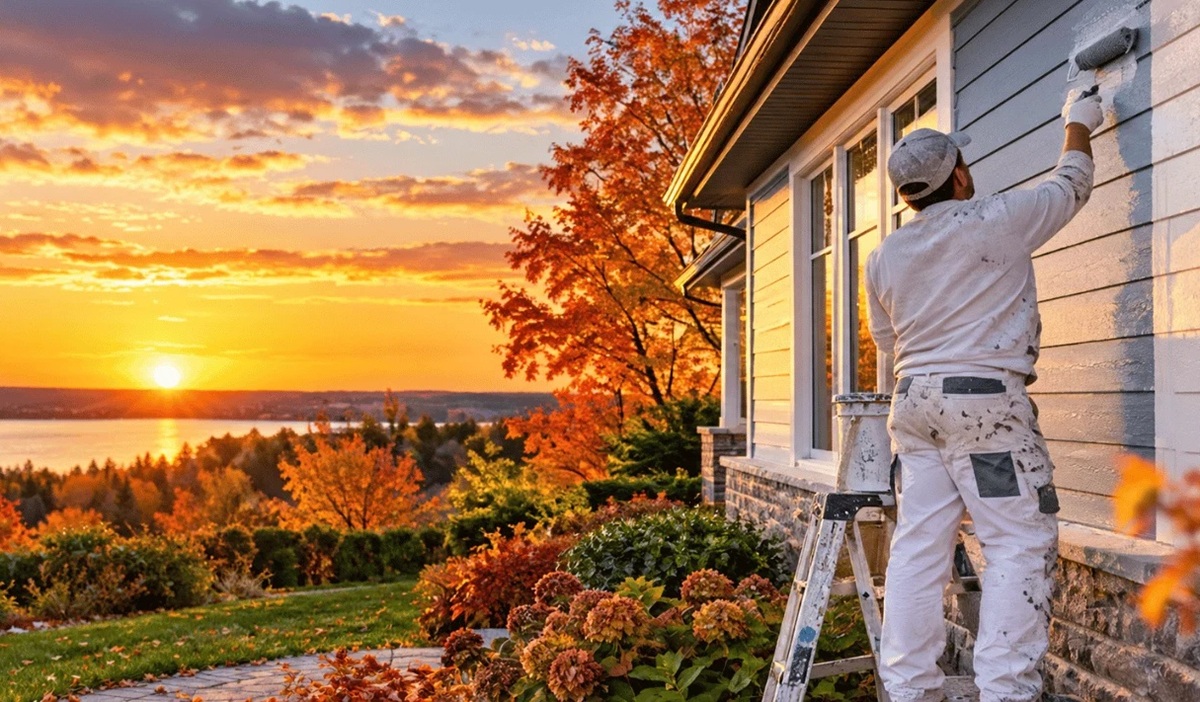
Many homeowners assume exterior painting ends when summer does. Once the heavier jackets come out, painting the siding, refreshing the trim, or finishing the front porch gets pushed to spring. For the MOST part. But here’s what’s cool about paint. 🙂 Cheesy pun, right?
Cooler weather does not automatically mean the opportunity has gone. Certain exterior paints allow low temperature application and curing temperatures. The number we see in some of these products in the last several years is around 4°C. That being the minimum overnight temperature, making fall painting still a practical possibility when the surface and forecast meet the product’s requirements.
For homeowners in St. John’s, that means an unfinished exterior project may still be worth assessing before winter. The decision depends on the paint, the condition of the building, and the weather during application and drying.
How Can Exterior Painting Services Still Happen With Snow Around the Corner?
Some exterior acrylic paints are specifically formulated for application in cool conditions. Painting “around 4°C” is a useful way to describe the opportunity, but the exact minimum printed on the selected product must be followed. And the minimum conditions are beyond just the minimum temperature. Keeping an eye as well on humidity levels, and curing temperatures, and some magic late-season painting can happen. These products below are a few examples of paints from the BIG FISH of painting products!
- Dulux Diamond Exterior. Applicable down to as low as +2°C. Quick drying exterior paint, resisting cracking and peeling in changing weather conditions.
- Benjamin Moore Aura Exterior: A super premium 100% acrylic latex paint, suitable to be applied down to 1.7°C!
- Benjamin Moore Regal Select Exterior: A high-build formula that offers high durability and crack resistance, also rated down to 1.7°C.
As you can see above, these products in the last several years have become game changers for extending the season. The only thing to watch out for is that it also does not mean EVERY exterior paint, stain, or primer can be used at that temperature. EACH part of the coating system needs to suit the conditions. Choosing a suitable finish coat will not alone get the job finished if the required primer needs warmer weather!
The important question is therefore more specific than “Is it too cold to paint?” It is: “Can the right coating system be applied and allowed to dry properly in these conditions?”
The Forecast Matters BEYOND the Exterior House Painting Hours
A mild afternoon can make a late-fall project look straightforward. However, the hours after painting deserve just as much attention.
Fresh paint continues developing its film after the brushes are put away. The water (or oil) based solvent evaporates from the paint and the solids harden, to develop that hard film we know as dried paint. Cooler conditions can slow drying, so a surface that feels dry to the touch may still need protection from unsuitable temperatures and moisture.
Before work begins, the painter should consider the overnight low, the chance of rain or frost, and the drying conditions required by the manufacturer.
For example, an afternoon reaching 10-15°C does not automatically provide a suitable opportunity if temperatures are expected to fall sharply that evening to freezing. A steadier forecast may offer a better working window, even if the daytime high is lower. Each product you consider, will tell you the minimum overnight temperatures during curing. That curing window might be around that 2-4°C mark, but for 48 hours.
Low-temperature paint extends the season, but it does not remove the need to plan around the weather.
How Can Professional Painters Near Me Know or Measure How Dry Surfaces Are? Or How Dry The Air Is?
Both air temp, and air moisture levels are essential. Both are measurable. Temperature is only one part of the decision. A wall can be warm enough to paint and still be too damp.
In St. John’s, a late-fall painting assessment should account for rain, fog, dew, and how exposed the property is. Shaded siding, porch details, and areas beneath vegetation may dry differently from surfaces receiving direct sunlight. Air temperature and surface temperature can differ. Same with the moisture levels.
A forecast showing suitable conditions does not confirm that every wall, railing, or piece of trim is ready.
So we can measure.
If it’s not obviously very dry but “maybe too wet”, we can measure.
A laser surface temperature meter.
And a moisture meter probe for surface temperatures.
The practical approach is to inspect the actual surface, allow moisture to clear, and check conditions before applying the coating. If in doubt, a measurement is a sure-fire way to know. The requirements will be written on the paint can, and will typically say something like MINIMUM +4°C, for 48hrs, with a relative humidity of less than 50% (or else double the drying time).
Smaller Projects Can Fit the Remaining Weather Window
If dancing with the fall weather seems daunting, late fall can still provide opportunities to repaint a front door, refresh exterior trim, or complete a smaller manageable section of siding.
These projects may fit a shorter period of suitable weather more readily than an entire house exterior. The scope should match the available time for preparation, priming, coating, and drying- not just the hours needed to apply paint.
Preparation still remains essential. Loose paint needs removal, dirt and contamination need cleaning, and bare or repaired areas may require primer. While exterior painters may be fine with a toque, keep in mind that any filler products, caulking, or other preparation products must also be suitable for the temperature. Exterior painters can warm up afterward with some hot cocoa. Some of your painting products, can’t.
A smaller project completed properly is more worthwhile than a larger one rushed through deteriorating conditions.
You May Not Need to Wait Until Spring
The arrival of late fall does not create an automatic deadline for exterior painting. With a suitable coating, dry surfaces, and a favourable forecast, painting around 4°C can remain a realistic option.
The next step is an assessment rather than an assumption. Some projects can proceed during the remaining weather windows; others will benefit from waiting.
If you have exterior work unfinished, St. John’s Pro Painters can assess whether the conditions and coating requirements allow it to be completed before winter. You may have more painting season left than you think. If you’re searching online for painters near me within the areas of St John’s, NL from Torbay to Conception Bay South, to Goulds, follow the underlined link to St John’s Pro Painters. These painters cover all of Town and they will help you pick an appropriate paint, and apply an appropriate process, for a job that lasts.